
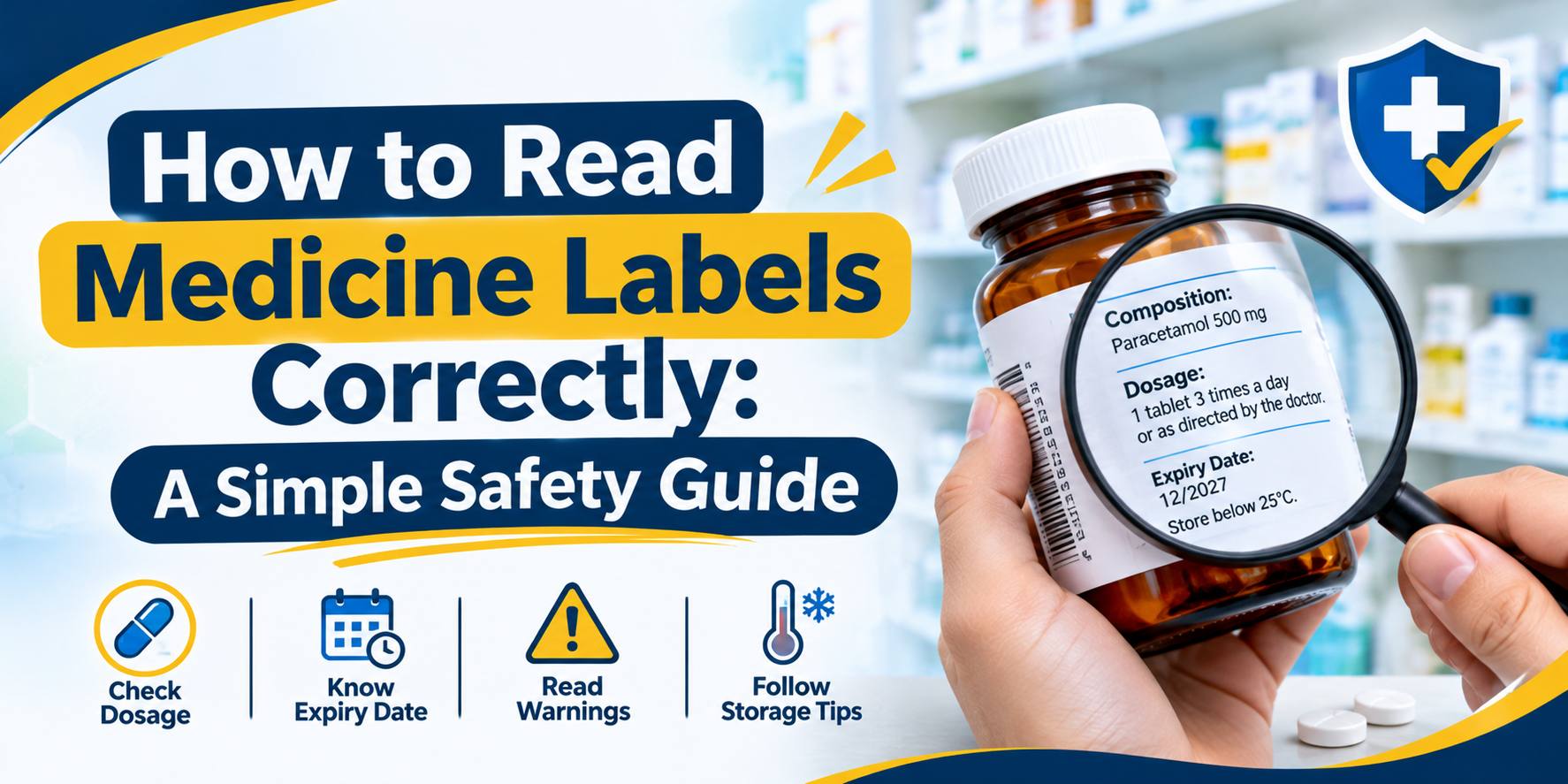
How to Read Medicine Labels Correctly
Have you ever picked up a medicine strip or bottle and wondered what its strength, composition, batch number or expiry date means? Medicine packaging contains important information that helps patients, caregivers and healthcare professionals identify a product and understand its instructions for use.
However, many people focus only on the brand name and overlook other details. This can lead to confusion between medicines with similar names, incorrect use or avoidable medication mistakes.
Learning how to read medicine labels correctly is an important part of responsible healthcare. Whether you are checking a prescription medicine, an over-the-counter (OTC) product or a medicine prescribed for a family member, understanding the label can help you ask the right questions and follow professional advice.
Here is a simple guide to the key details you should check before using a medicine.
1. Start with the Medicine Name and Active Ingredients
The medicine name is usually printed prominently on the front of the packaging. It may include a brand name and the generic name of the active ingredient.
The active ingredient is the substance responsible for the medicine's intended therapeutic effect. Some medicines contain one active ingredient, while combination products contain two or more.
Why does this matter?
Different brands may contain the same active ingredient. Taking multiple products with the same ingredient without realising it may result in an unintended extra dose.
Always check the composition rather than relying only on the brand name. If you are unsure whether two medicines contain the same ingredient, ask a pharmacist or doctor before combining them.
2. Understand the Strength and Dosage Form
The strength tells you how much active ingredient is present in a particular quantity or unit of medicine.
For example, a tablet may be labelled 500 mg, while a liquid medicine may show a concentration such as 125 mg/5 mL. These measurements are not interchangeable.
You should also identify the dosage form, which describes how the medicine is prepared for use.
Common dosage forms include:
-
Tablets: Solid medicines generally taken by mouth.
-
Capsules: Medicines enclosed in a dissolvable shell.
-
Syrups and suspensions: Liquid preparations, which may have different concentration instructions.
-
Ointments and creams: Preparations generally applied to the skin.
-
Eye or ear drops: Liquid preparations intended for a specific application site.
-
Injections: Medicines administered by an appropriate healthcare professional or as specifically instructed.
Never assume that medicines with the same ingredient can be used in the same way. Follow the prescribed dosage form and instructions.
3. Read the Dosage and Directions Carefully
Dosage instructions explain how much medicine to use, how often to use it and, where specified, how long to continue.
Pay attention to details such as:
-
The prescribed quantity or dose.
-
The frequency of administration.
-
Whether the medicine should be taken before or after food.
-
Whether it should be swallowed whole or used in another way.
-
Any special instructions provided by the doctor or pharmacist.
For liquid medicines, use the measuring device supplied or recommended for that product. Household teaspoons and tablespoons may not measure the correct quantity.
Also, do not change the prescribed dose, stop a course early or take an additional dose because symptoms continue without consulting a healthcare professional.
4. Check the Warnings and Precautions
The warning section deserves particular attention. It may contain information about situations in which a medicine should be avoided or used only after professional advice.
Look for warnings relating to:
-
Possible side effects.
-
Allergies or sensitivity to ingredients.
-
Interactions with other medicines.
-
Alcohol or certain foods.
-
Pregnancy and breastfeeding.
-
Existing medical conditions.
-
Age-related precautions.
-
Activities such as driving, if the medicine may cause drowsiness.
Some medicines require medical supervision and should not be taken without an appropriate prescription. In India, certain prescription medicines carry specific cautionary statements under the Drugs Rules.
If a warning is unclear, do not guess what it means. Ask your doctor or pharmacist to explain it.
5. Understand the Manufacturing and Expiry Dates
Two important details printed on medicine packaging are the manufacturing date and expiry date.
-
Manufacturing date (MFG): Indicates when the medicine was manufactured.
-
Expiry date (EXP): Indicates the date until which the manufacturer recommends the medicine for use under the specified storage conditions.
In India, where the expiry date is expressed in month and year, the Drugs Rules define it as the last day of the stated month.
For example, if a medicine shows an expiry date of 11/2026, it is recommended for use up to 30 November 2026, subject to the product's storage requirements.
Do not use medicines beyond their expiry date. Also, avoid using products that have changed in appearance, smell or texture, or have damaged packaging—even if the printed expiry date has not passed. Seek advice from a pharmacist.
6. Look for the Batch Number and Manufacturer Details
Medicine packaging also carries identification details that help trace the product.
Batch or Lot Number: A unique code used to identify a particular manufacturing batch. It is useful when reporting a product complaint or checking a recall.
Manufacturer's Name and Address: Identifies the company responsible for manufacturing the medicine.
Maximum Retail Price (MRP): Shows the maximum retail price printed on the pack, inclusive of applicable taxes.
Check that the packaging is intact and that the medicine name and details match the prescription or advice you received. Avoid purchasing products with suspicious or damaged packaging.
7. Follow the Storage Instructions
Medicines can be affected by heat, moisture, light and unsuitable storage conditions. The label or accompanying leaflet may specify how a product should be stored.
Common instructions include:
-
Store below the temperature stated on the pack.
-
Protect from direct sunlight.
-
Keep away from moisture.
-
Refrigerate only when specifically instructed.
-
Keep the container tightly closed.
-
Store away from children's reach.
Do not assume that every medicine should be kept in a refrigerator. Follow the storage instructions for the particular product.
For liquid medicines, also check whether there are special instructions about use after opening or reconstitution.
8. Check the Label Every Time You Use a Medicine
Even if you have used a medicine before, read its packaging again before use. A new purchase may have a different strength, formulation or set of instructions.
A few practical habits can make medicine use safer:
-
Match the medicine name and strength with the prescription.
-
Check the active ingredients.
-
Read the dosage and warning instructions.
-
Confirm the expiry date and packaging condition.
-
Follow the recommended storage conditions.
-
Keep medicines in their original packaging wherever possible.
-
Ask a pharmacist if any detail is unclear.
Remember, reading a label does not replace medical advice. Prescription medicines should be used according to the instructions of the prescribing healthcare professional.
Why Understanding Medicine Labels Matters in Pharmacy Education
Reading medicine labels is not only a useful habit for patients; it is also an essential skill in pharmacy practice. Pharmacists help people understand medicine composition, dosage instructions, precautions and appropriate storage.
Students pursuing pharmacy education study subjects such as pharmacology, pharmaceutics and community pharmacy to understand how medicines work and how they should be handled and dispensed responsibly.
At JIS Institute of Pharmacy, students can explore pharmacy education through programmes such as Diploma in Pharmacy (D.Pharm) and the Bachelor of Pharmacy (B.Pharm) programme. These academic areas help build knowledge relevant to medicine use, pharmaceutical sciences and patient counselling.
Readers interested in learning more can also explore the institute's pharmacy articles and educational blogs.
Frequently Asked Questions (FAQs)
1. What is the most important information to check on a medicine label?
Start with the medicine name, active ingredients, strength, dosage instructions, warnings and expiry date. Also check storage conditions and packaging integrity.
2. What is the difference between a medicine's strength and dosage?
Strength refers to the amount of active ingredient in a particular unit or quantity of medicine. Dosage refers to the amount a patient is instructed to take or use at a particular time.
3. How can I check whether a medicine has expired?
Look for the EXP or expiry date printed on the strip, bottle or outer carton. In India, an expiry date stated in month and year generally means the last day of that month. Do not use an expired medicine.
4. Why should I check the active ingredients instead of only the brand name?
Different brands may contain the same active ingredient. Checking the composition helps identify duplicate ingredients and reduces the risk of accidentally taking more than the intended amount.
5. What should I do if I cannot understand the instructions on a medicine label?
Do not guess or change the dosage yourself. Contact the prescribing doctor or ask a qualified pharmacist to explain the instructions before using the medicine.
Conclusion
Medicine labels are more than packaging details. They provide essential information about a product's identity, composition, strength, usage, warnings, expiry and storage requirements.
Knowing how to read medicine labels correctly can help patients and caregivers become more informed about the medicines they use. Make it a habit to check the label every time, follow professional instructions and seek clarification whenever something is unclear.
A few moments spent reading a medicine label can make a meaningful difference to safe and responsible medicine use.
Health Disclaimer: This article is intended for general educational awareness and does not replace professional medical advice, diagnosis or treatment. Always follow your doctor's prescription and consult a qualified pharmacist or healthcare professional if you have questions about a medicine.